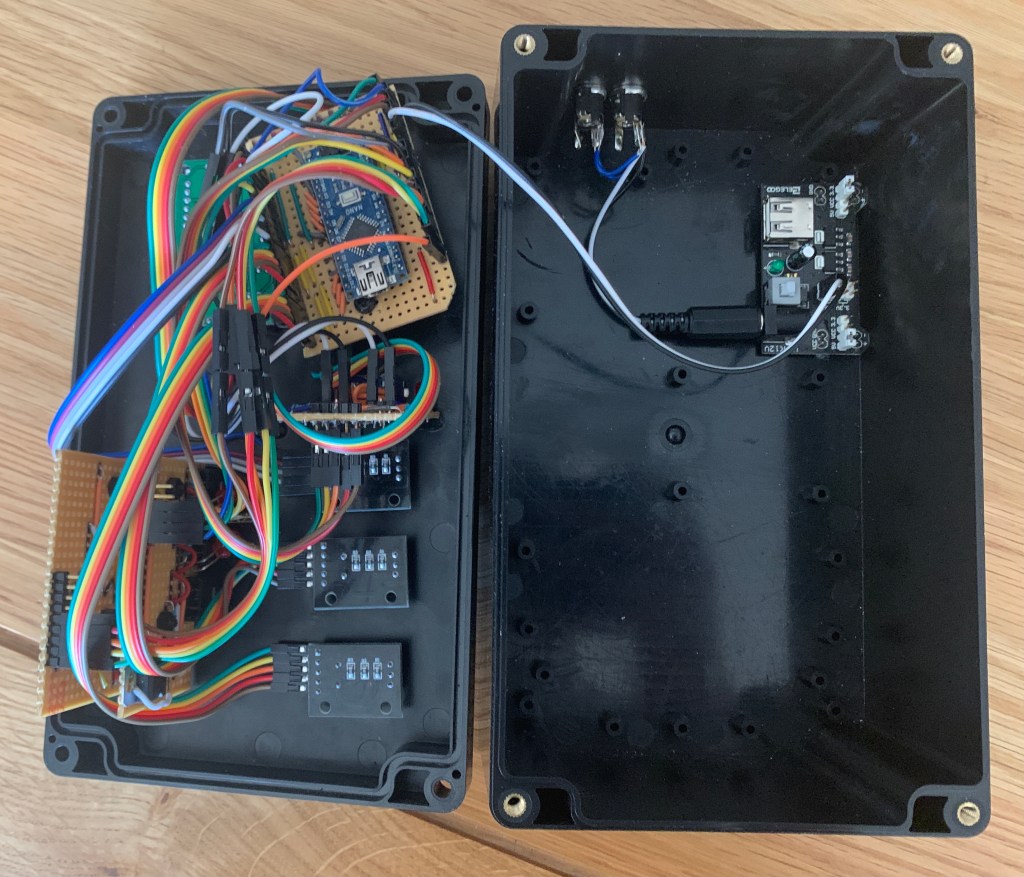
The sequencer was now working, but needed to be built into a more robust housing. While the end goal is to miniaturise into Eurorack compatible modules, for now I decided that preliminary work on other modules would better improve my electronics skills before moving on to PCB design. As such, I did some searching and found these plastic ‘project boxes’ on Amazon. These are just the right size to safely hold my circuits, displays and controls, and also look much smarter than a half opened cardboard box!
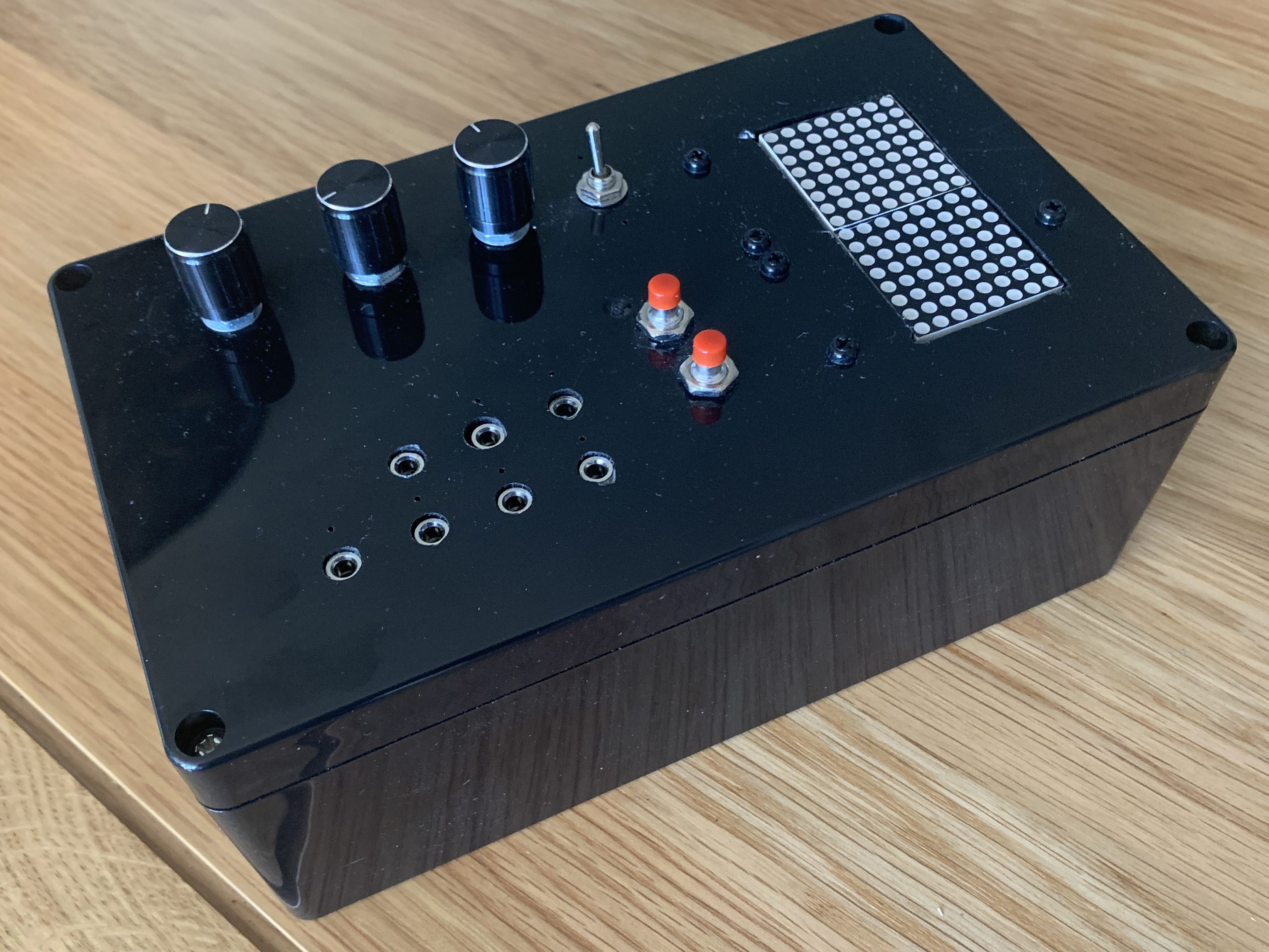
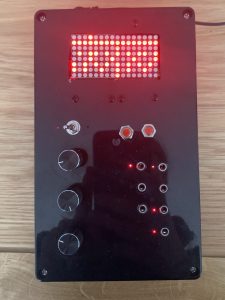
Small holes were drilled through the box to allow the LEDs mounted on the circuit boards to shine through, signifying when each output is active.
Another consideration was power. The Arduino UNO boards I had previously been using worked with a 12V input, but the NANO sacrifices this option for its smaller form factor. This meant the addition of a power regulation board (purchased again from Amazon). I also added twin power ports to allow daisy-chaining of power between this device and those to be built shortly.