Now that the module itself is mostly operational, I needed a way to actually mount it into a Eurorack skiff.
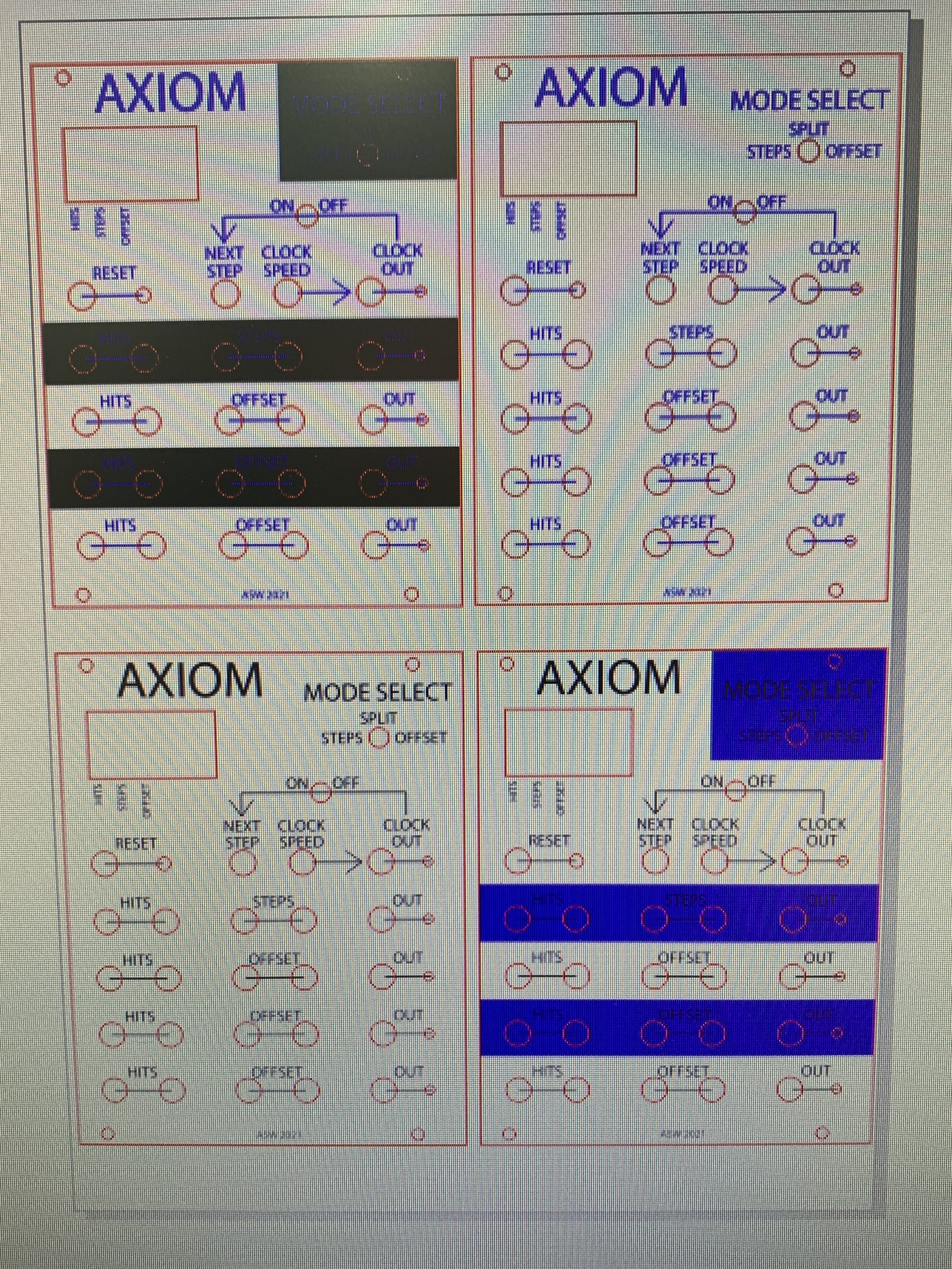
Doepfer specify the use of 2mm anodised aluminium for faceplates, but this is not particularly easy to cut precisely without specialised equipment which I do not have access to. However, we do have a laser cutter in the 3D labs at the University. I decided that 2mm acrylic sheet would be a good substitute material, asked a colleague for some help in using this equipment.
Doepfer specify the dimensions of a module faceplate on their website, so it was relatively easy to create a template in Adobe Illustrator of the correct size for a 20HP module with appropriate mounting holes, and then add all of the holes needed for my module to attach. Lastly, I needed to design and add all of the labelling, which will be etched into the surface of the acrylic sheet. This was all based on the 3D model I had made much earlier in the process. At this point I had a think about the name of the module, and decided to change it to “Axiom”, as this fits the Euclidean theme but is also not in use by any other module I can find on the market.
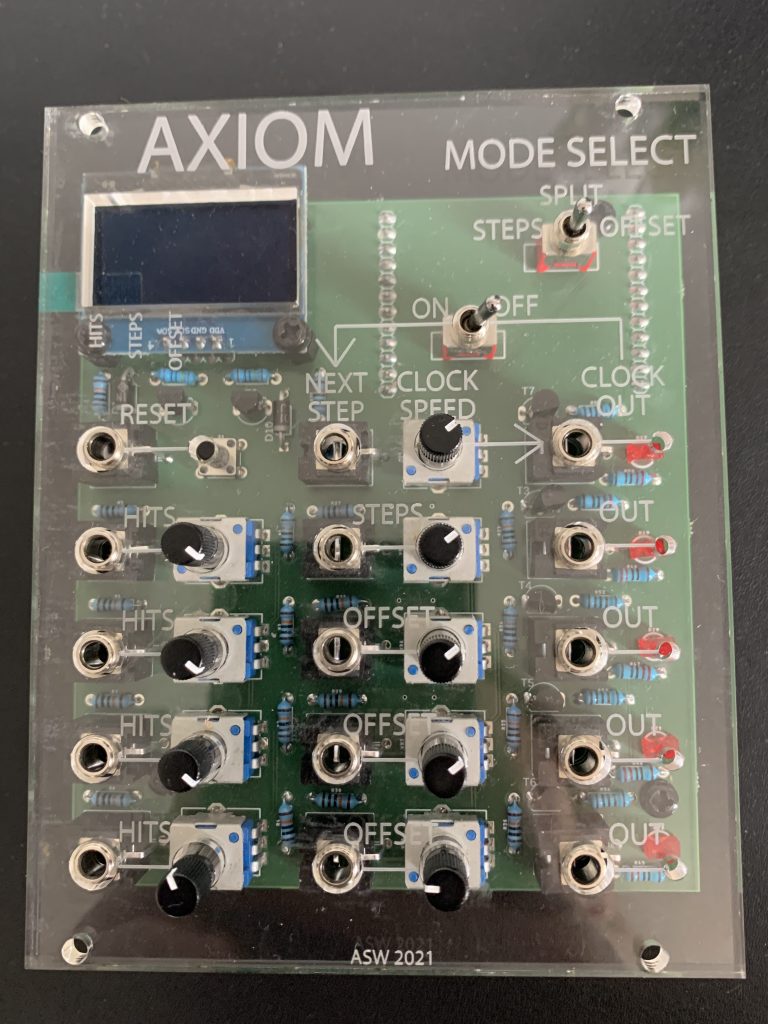
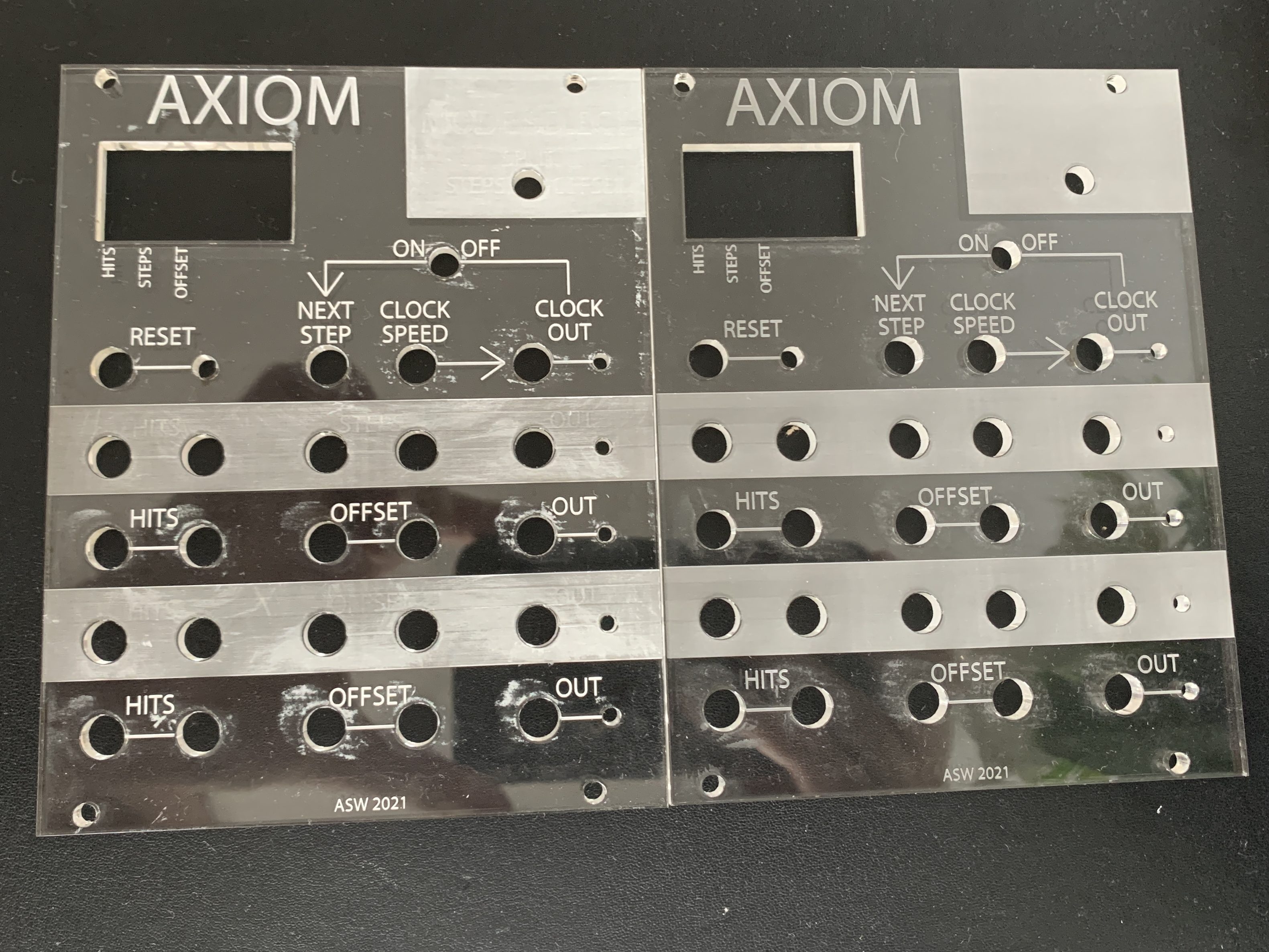
I popped into the University to get this test file cut, and was very happy with the results! The large etched areas did not really work, so I will scrap these from the final design, but the lettering and labelling all look great, and the holes are all in the right places for my module to fit perfectly! Unfortunately only 5mm acrylic sheet was available so I am unable to fully assemble the unit at this point, but some black 2mm has been ordered so I should be able to cut the final faceplates next week.
I also did some testing with adding paint to the etched areas to make things more clear. The picture below shows two of the discarded faceplates with large etched areas – the one on the left has added paint and the one on the right does not. There is a bit of mess around the cutting, but I am hoping that some T-Cut will smooth out the surface and fix these imperfections.